Beyond the Harmonies: Ten Pianists on Philip Glass’s Etudes
By Weslan Hansen, Cal Performances Engagement Writer
From New York City, to London, to Moscow, renowned composer and pianist Philip Glass’ Etudes have carried innovative harmonies to concert halls around the world. And on November 20, they will make their way to Berkeley ahead of his 90th birthday.
Defined by repetitive phrases and tonal harmonies, the Etudes are Glass’ most personal collection of work. Composed over two decades, from 1991 to 2012, the 20 etudes were first performed as a complete set in December 2014 at BAM in New York. The artists bringing The Complete Philip Glass Piano Etudes to Zellerbach Hall are Timo Andres, Anton Batagov, Sarah Cahill, Janice Carissa, Aaron Diehl, Simone Dinnerstein, David Kaplan, Daniela Liebman, Jason Moran, and Clara Yang.
“This is a rare opportunity to experience all of the etudes in one sitting, not all of which are commonly performed; and the fact that they will be performed by not one but ten incredible pianists illustrates the reach and impact that these works have had,” said Jeremy Geffen, executive and artistic director of Cal Performances.
“Any opportunity to celebrate someone who has made such an enormous cultural contribution during their lifetime, we should take,” Geffen said.
“Endless Potential”: What Makes the Etudes Unique
Anton Batagov, a Russian composer and pianist, was one of ten pianists who premiered The Complete Etudes in December 2014 at BAM alongside Glass himself. “That was an unforgettable experience,” Batagov said, recalling that Glass remarked that Batagov’s performance was “very Russian” and came directly from his heart. In 2017, in honor of Glass’s 80th birthday, Batagov performed The Complete Etudes at a sold-out show at the Svetlanov Hall of Moscow International House of Music. Nearly a decade later, he is participating in The Complete Etudes performance at Cal Performances.
“There is nothing in contemporary classical music that can compare to this cycle of etudes,” Batagov said. “This is a really unique phenomenon in music history. Music by Glass has endless potential to be played in [an] endless variety of ways and have [an] endless variety of meanings.”
Aaron Diehl, an American jazz pianist and composer, also performed The Complete Etudes at BAM in 2014. Since then, he said the Etudes have been a consistent collaborative project with other top artists. “The Etudes are emblematic of Philip’s broad range,” Diehl said.
While Glass has been a pioneer of his techniques, his Etudes call to the work of Schubert and Bach, said Simone Dinnerstein, an American classical pianist.
“Something about Glass’ gift for staying in an emotional place, living in one harmony before feeling the need to move to another, and extending a phrase over an achingly long period, echoes back to Schubert,” Dinnerstein said.
“This is music that can move in many different directions depending on the imaginative insights of the musicians,” she added.
David Kaplan, an American piano soloist and chamber musician, also noted that the Etudes allow individual pianists to explore and experiment in their own way.
“The laissez-faire restraint in Glass’s notation is a wonderful gift,” Kaplan said. “I enjoy mining hidden meaning by responding to the verse-like structures with subtle shifts of dynamic, color, articulation, mood, texture, and pulse.”
“There is nothing in contemporary classical music that can compare to this cycle of etudes. This is a really unique phenomenon in music history.”
–Anton Batagov
A Lasting Influence
American pianist and composer Timo Andres was called in to perform the final seven of Philip Glass’s Etudes just a week before a 2013 concert in London. More than a decade later, the music is still a huge part of his life.
Andres recently worked on new editions of the Glass Etudes’ scores, which were published in October 2023 with Artisan Books. “This music really is a grand statement for small forces,” Andres said, adding that it’s important when contemporary music “can update what is considered canonical.”
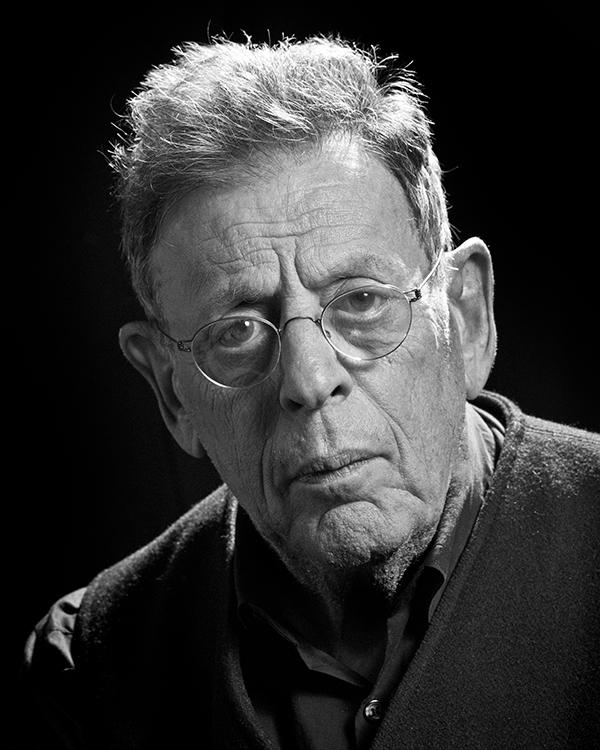
Portrait of Philip Glass by Kenneth Chou
The Etudes are also helping to define the next era of music. Both Jason Moran, an American jazz pianist and composer, and Clara Yang, an American concert pianist and professor at UNC-Chapel Hill, said Glass’ work has inspired their own pieces and projects.
“Glass teaches a pianist about the intensity of focus, and the evolution of an idea,” Moran said, adding that he has written many pieces based on the Etudes. “It is only right that I sit down and find my way through the focus, in front of an audience.”
Yang performed alongside Glass and other artists during the Glass at 80 Festival, presented by Carolina Performing Arts in 2017. Now, Etude No. 11 is part of her current project, Ex Machina, which premiered in New York at the Baryshnikov Arts Center in May 2026.
“To me, the Etudes are deeply personal and creative: each one tells its own story, and together they trace a beautiful arc across the whole set,” Yang said.
About Philip Glass
Glass was born in Baltimore in 1937. Before piano, he was a flutist and did not learn to play piano until he arrived at the University of Chicago, according to a conversation Glass had with public-radio host Ira Glass.
He later studied at the Juilliard School and at Aspen with Darius Milhaud. In Europe, he studied with Nadia Boulanger and worked with Ravi Shankar. After returning to New York in 1967, Glass created the seven-member Philip Glass Ensemble. His collaborators have included Allen Ginsberg, David Bowie, Paul Simon, Linda Ronstadt, Yo-Yo Ma, Leonard Cohen, and Doris Lessing.
Glass will not be present at the performance, but he shared a message about the artists hand-selected for the Cal Performances program:
“The pianists performing this evening were chosen for their high level of technical accomplishment, wide range of musical backgrounds, and the depth of their interpretive skills,” Glass said in a program note provided by his production team at Pomegranate Arts. “I am grateful to all of them for their personal efforts and generosity in bringing their own voice and interpretation to these works that are so meaningful to me.”