
Jordi Savall Hespèrion XXI La Capella Reial de Catalunya and special guests
Songs, Battles, and Dances from the Old and the New World (1100–1780)
Tuesday, April 21, 2026, 7:30pm
Zellerbach Hall
With the support of the Departament de Cultura de la Generalitat de Catalunya and the consortium Institut Ramon Llull
Cal Performances is committed to fostering a welcoming, inclusive, and safe environment for all one that honors our venues as places of respite, openness, and respect. Please see the Community Agreements section on our Policies page for more information.
Songs, Battles, and Dances
from the Old and the New World (1100–1780)
This program is a sound journey that traces the map of the influences that crossed between the Old and the New World. Through three axes—song, battle, and dance—the repertoire explores how music served as a tool of faith, resistance, and survival during seven centuries of global transformations.
Faith and War in Medieval and Renaissance Europe
The concert opens with the voice of Marcabru, one of the first troubadours, whose song personifies the spirit of the Crusades. This European spirituality evolves towards the polyphony of Josquin des Prés, where the plea for peace (“Dona nobis pacem”) contrasts with the realism of the musical “battles” of Mateo Flecha or Pierre Attaingnant, who imitated the sounds of war with great rhythmic richness.
The Dialogue of Cultures in the New World
With the arrival in America, the European tradition encounters native and African languages and rhythms. The works of Gaspar Fernandes are the best example of this syncretism: villancicos that use Nahuatl or Afro-Hispanic dialects (such as the Flecha’s Negrina or the Zéspedes’ Guaracha). These pieces not only sought evangelization but also welcomed the pulse of popular celebrations and the identity of mestizos and slaves.
The Spirituality of Slavery
Interspersed throughout the program, the slave songs and spirituals (such as Another man done gone or Indodana) act as a mirror of pain and hope. These melodies, born of the African diaspora, dialogue with the psalms of the Jewish tradition of Salomone Rossi, and Sephardic prayers, reminding us that music has always been the refuge of oppressed communities.
The Codex Trujillo: The Last Reflection
The concert concludes with pieces from the Codex Trujillo (ca. 1780), an exceptional document that collects the music of colonial Peru. The Tonada de El Chimo is a unique testimony, as it preserves the only musical trace of the Yunga language, from the Mochica/Yunga language (the Mochica language, chimú, yunga, or yunka (muchik) is one of the languages spoken on the coast and in part of the northern mountains of Peru) closing the circle of this dialogue between scholarship and oral tradition, between the European past and the birth of a new American identity.
—Jordi Savall
Bellaterra, February 2026
About the Artists


After a truly remarkable six months that began last September and have seen nonstop presentations of the finest in music, dance, and theater at UC Berkeley, Cal Performances’ 2025–26 season moves into the home stretch in the coming weeks, and our final presentations offer an array of music and dance programs sure to appeal to a wide variety of interests.
Our dance series concludes in grand style, with two weeks of the very best in contemporary dance. The beloved Alvin Ailey American Dance Theater returns for its annual Zellerbach Hall (ZH) residency (Apr 7–12), its first Berkeley performances under new artistic director Alicia Graf Mack. With brand-new commissions from next-generation creators and beloved works by Ailey himself, this revered institution continues to embody the values and vision of its founder through performances of exceptional power, beauty, and grace. And just one week later, The Joffrey Ballet—another powerhouse American dance ensemble—arrives with Midsummer Night’s Dream, choreographer Alexander Ekman’s surreal and daring work set during Midsommar, the traditional Scandinavian summer solstice festival (Apr 17–19, ZH). You would have to search far and wide to find two weeks packed with a more impressive dance lineup than what you’ll see on the Zellerbach stage this month.
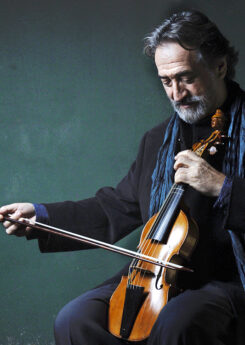
In classical and early music, we’ll enjoy the return of superstar director and viol player Jordi Savall and his acclaimed Hespèrion XXI, La Capella Reial de Catalunya, and special guests (Apr 21, ZH); sublime French pianist Alexandre Kantorow, making his Bay Area recital debut in a fascinating program of thoughtfully curated keyboard music (Apr 23, ZH); the ever-popular The Tallis Scholars with their brilliant Mysteries and Miracles program (Apr 24, First Church, Berkeley); and a pair of special concerts featuring three celebrated performers—Cal Performances’ 2026–27 Artist in Residence, pianist Víkingur Ólafsson (Apr 29, ZH), and soprano Renée Fleming with pianist Inon Barnatan in a very special duo recital (May 3, ZH).
The curtain falls on the 2025–26 season with Lara Downes and Friends performing This Land: Reflections on America (May 9, ZH). In the stirring and eclectic presentation, Downes—a celebrated pianist, NPR host, and California native—joins an all-star cast including folk legend Judy Collins, Grammy-winning singer and poet Tarriona “Tank” Ball (of Tank and the Bangas fame), the Invoke Quartet, and the Oakland Interfaith Gospel Choir for an inspiring selection of music spanning more than a century and reflecting on our capacity for empathy and community as we approach our nation’s 250th birthday.
Finally, I hope you’ll join us in late April, when we announce our thrilling 2026–27 season (if you’re reading this after that announcement, make sure to check out all the late-breaking details on our website). One major detail has already been made public—the Maria Manetti Shrem and Elizabeth Segerstrom California Orchestra Residency, when Cal Performances and the Philharmonic Society of Orange County will welcome the return of the world renowned Vienna Philharmonic and conductor Yannick Nézet-Séguin, this time accompanied by guest soloists Elīna Garanča, Christiane Karg, and Yuja Wang, during spring 2027. And I can promise you many more welcome and exciting surprises when full season details are announced.
I close by offering my heartfelt thanks to you, our audience. Your ongoing support and
enthusiasm truly fuel all of our many activities. Without you, a season like the one now drawing to a close would simply not be possible. All of us here at Cal Performances wish you a wonderful summer and look forward to seeing you again in September.
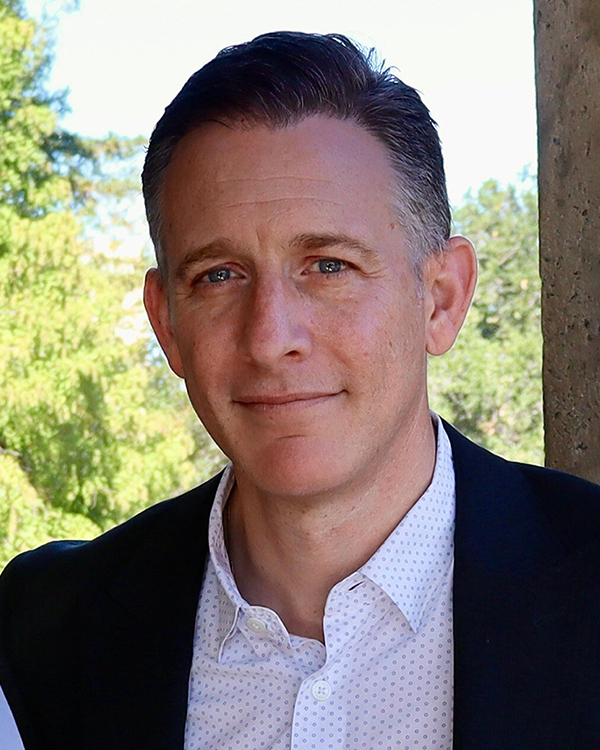
Jeremy Geffen
Executive and Artistic Director, Cal Performances