“It Might Even Sneak Up on You”: On Regaining Innocence
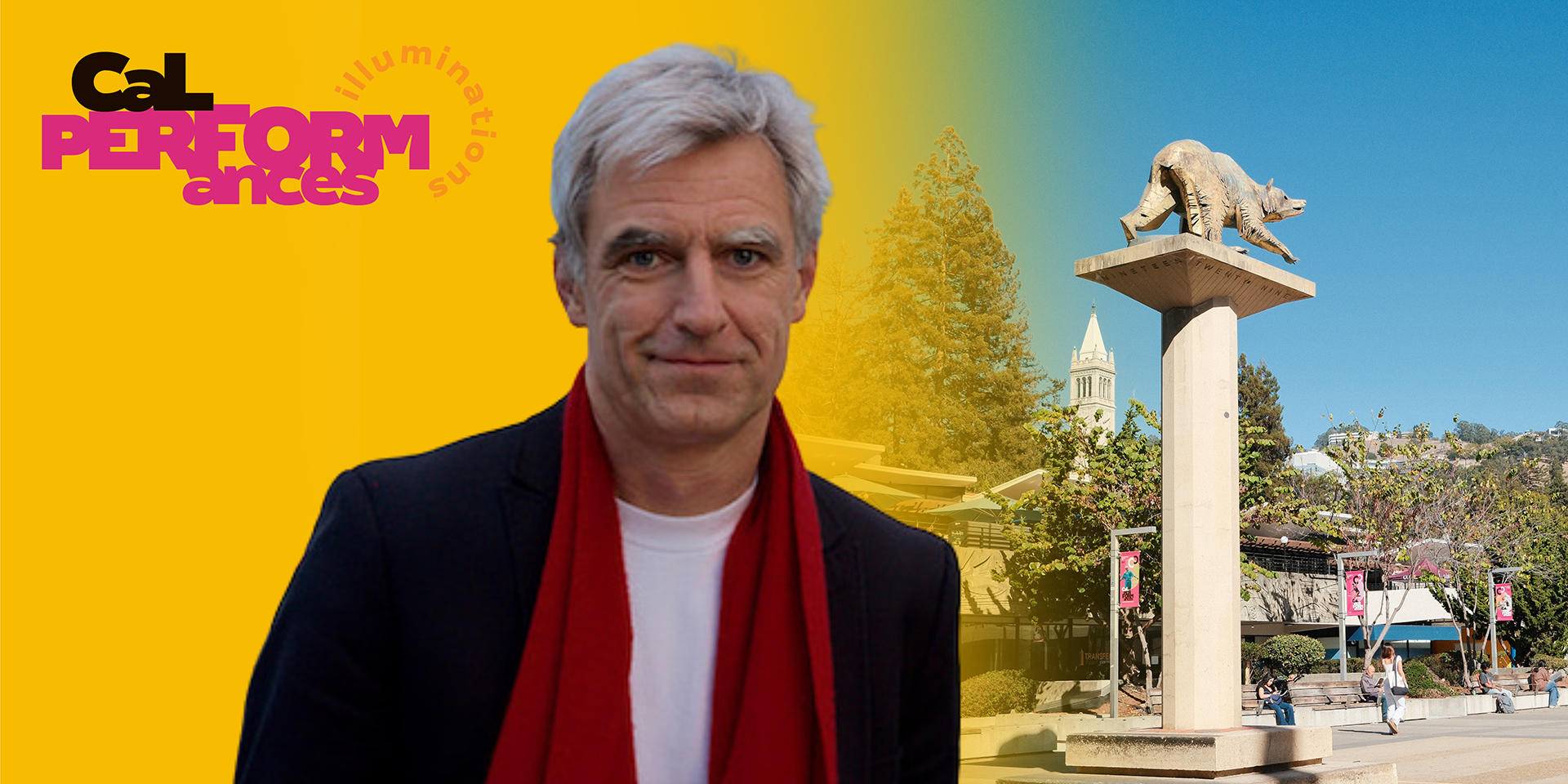
By Weslan Hansen, Cal Performances Engagement Writer
Every day, every minute, we get a little older, a little wiser. Is innocence something that we lose as we age, and when we lose it, is it something we can get back? Greg Niemeyer, a UC Berkeley professor of media innovation and co-founder of the Berkeley Center for New Media, thinks we can.
What is innocence? Niemeyer says that to him, innocence conjures an image of a child playing. There’s innocence in play, which is unbound by time, he explains. “Innocence comes about when we don’t work with the constraints of time, I believe,” Niemeyer says.
You don’t have to be a child to experience innocence, he says. “Innocence is a feeling like guilt, but opposite, and it fluctuates every day,” Niemeyer says. “Innocence is a kind of happiness, I think, and I feel it when I feel temporarily unbounded, not required to produce a specific outcome in less time than it takes.”
“I see innocence as a feeling that we don’t know we have when we are young. We appreciate it when we lose it. But if we lose it once, we know what it is when we encounter it again, we recognize it,” he adds.
That idea is at the heart of Cal Performances’ 2026–27 season, where we’re exploring the theme of “Innocence & Experience” as part of our Illuminations programming, which draws on work from both artists and scholars to unpack pressing topics of today. Each performance, conversation, and piece of media offers a fresh and unique lens through which to consider these two topics, with implications both expansive and intimate.
Niemeyer’s experience with innocence is personal. After being diagnosed with idiopathic pulmonary fibrosis, or progressive lung failure, he was given just months to live. Then he got a second chance: a rare, intensive double-lung transplant.
“When I recovered from the surgery with a new lung, I felt like I was born into a new life,” Niemeyer reflects. “I had a chance to ask myself what I learned from my past life, and what I wanted to carry over or leave behind.”
Part of that transition included coming to terms with the fact that he was not responsible for his donor’s passing, and fully welcoming the gift the donor had given him.
“The alternative would have led me to a dark place,” Niemeyer says. “I felt tremendous gratitude towards the donor, and that’s I think the prelude to regaining innocence.”
That gratitude shaped how he thinks about innocence more broadly. Niemeyer says he believes innocence can be gained by being kind, caring without expecting a reward, and being a positive force. “Innocence literally means not doing any harm,” Niemeyer observes.
“We can regain innocence whenever we engage with the world around us with the curiosity of a child and with the courage to wonder”
“We could optimize for that innocence instead of optimizing for profit,” Niemeyer explains. “To do that, we can practice seeing and feeling innocence. For example, next time someone runs late for a meeting with you, instead of feeling disrespected or annoyed, you can feel innocent and enjoy the fact that it is not your fault the meeting is delayed.”
He notes that sometimes we lose balance and make bad decisions because of that loss. He says we can also seek out and grant forgiveness, help recover from harm, and push beyond blame.
“We can regain innocence whenever we engage with the world around us with the curiosity of a child and with the courage to wonder,” Niemeyer says.
Watching a performance is also a way to slow down, pay attention, and become conscious of where you are in the world, he says.
One concert in particular at Zellerbach Hall, Igor Levit’s performance of Beethoven’s Seventh Symphony, transported Niemeyer to his childhood, when he first heard the symphony.
“It lasted about 40 minutes, but I completely forgot about time,” he reflects. “The music made me feel joyful, free, and innocent, because I was present in the music without any ulterior purposes. I received the gift with an open heart.”
When going into this year’s Illuminations experiences, Niemeyer suggests being open to the possibility of experiencing innocence.
“When you walk into Zellerbach, start with gratitude for what you are receiving, the gift of music. This makes space for innocence to follow,” Niemeyer says.
“The narrative that ‘losing innocence’ is a once-in-a-lifetime, total and irreversible moment is false,” he adds. “We can regain innocence, but we have to free ourselves from the nightmares of original sin and childhood ending, and we have to stop calculating our gains. It’s a feeling, and like all feelings, it circulates, it comes and goes, it might even sneak up on you. And if it does, welcome it in.”