“Innocence & Experience”: Embodied Experience
Produced and directed by Mina Girgis, Cal Performances’ Director of Education, Campus and Community Engagement; directed and edited by Lindsay Gauthier. Full credits below.
What does the body know that the mind doesn’t—and what do we lose when everything is built to go faster? During Cal Performances 2026–27 season, we’re exploring the theme of “Innocence & Experience” as part of our Illuminations programming, which connects extraordinary artistry with groundbreaking scholarship to unpack pressing topics of today.
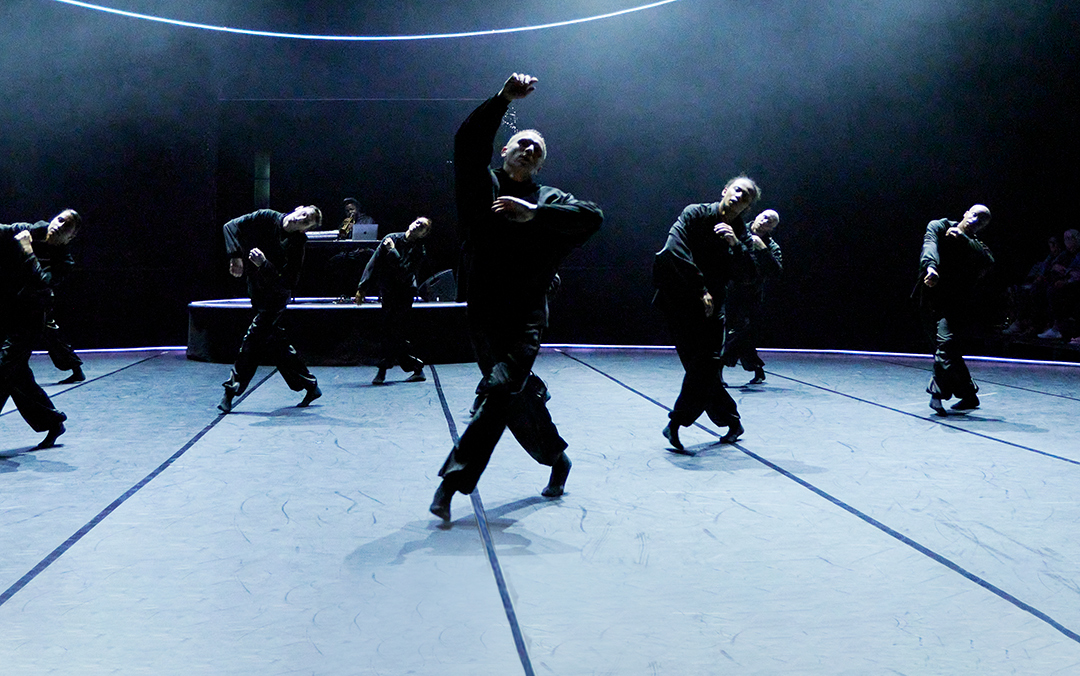
In this video, we engage performing artists and scholars to discuss the intersection of “Innocence & Experience” and concepts of embodied experiences, time, and technology—especially in the context of upcoming performances of Ambrose Akinmusire & Aszure Barton’s dance and jazz creation A a | a B : B E N D on the UC Berkeley campus.
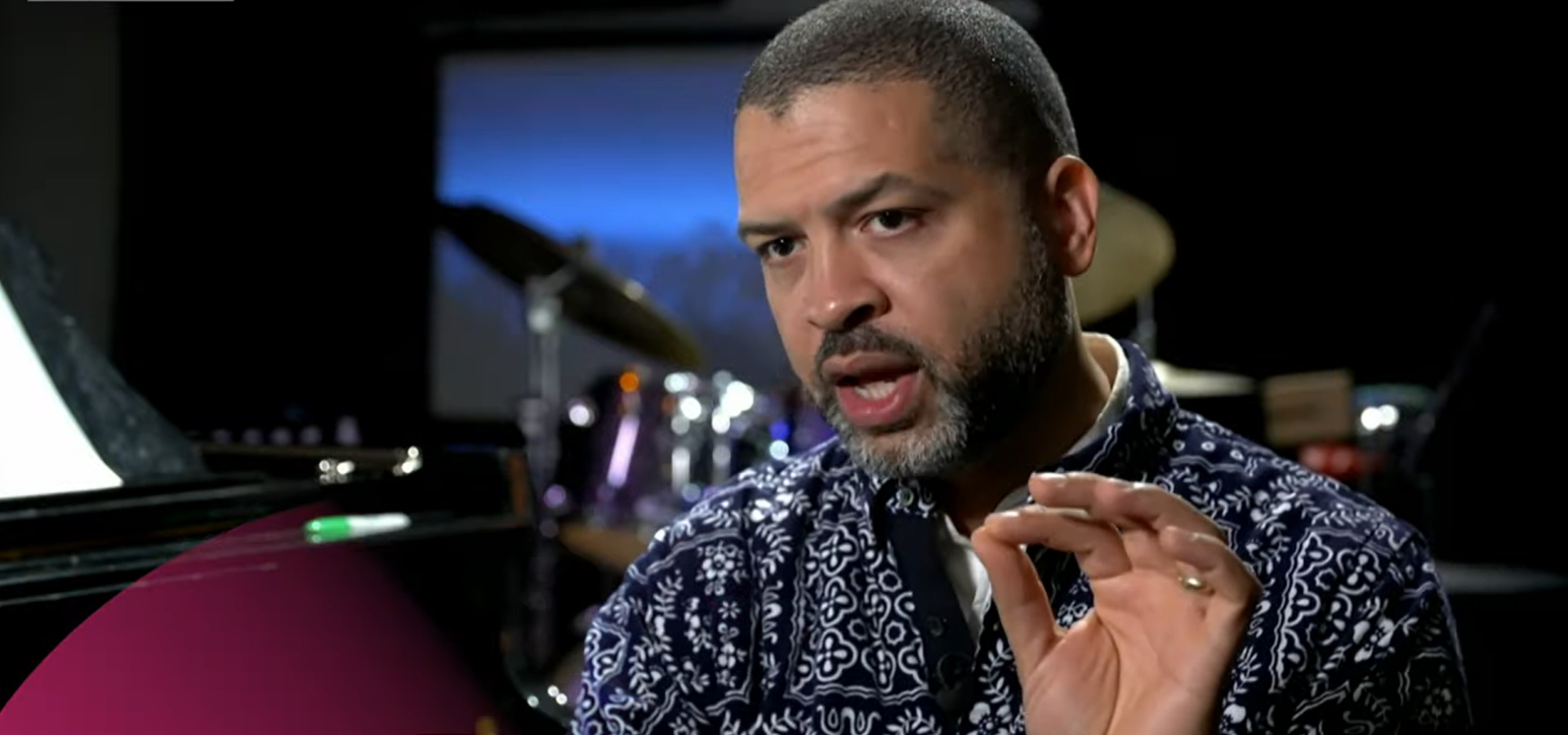
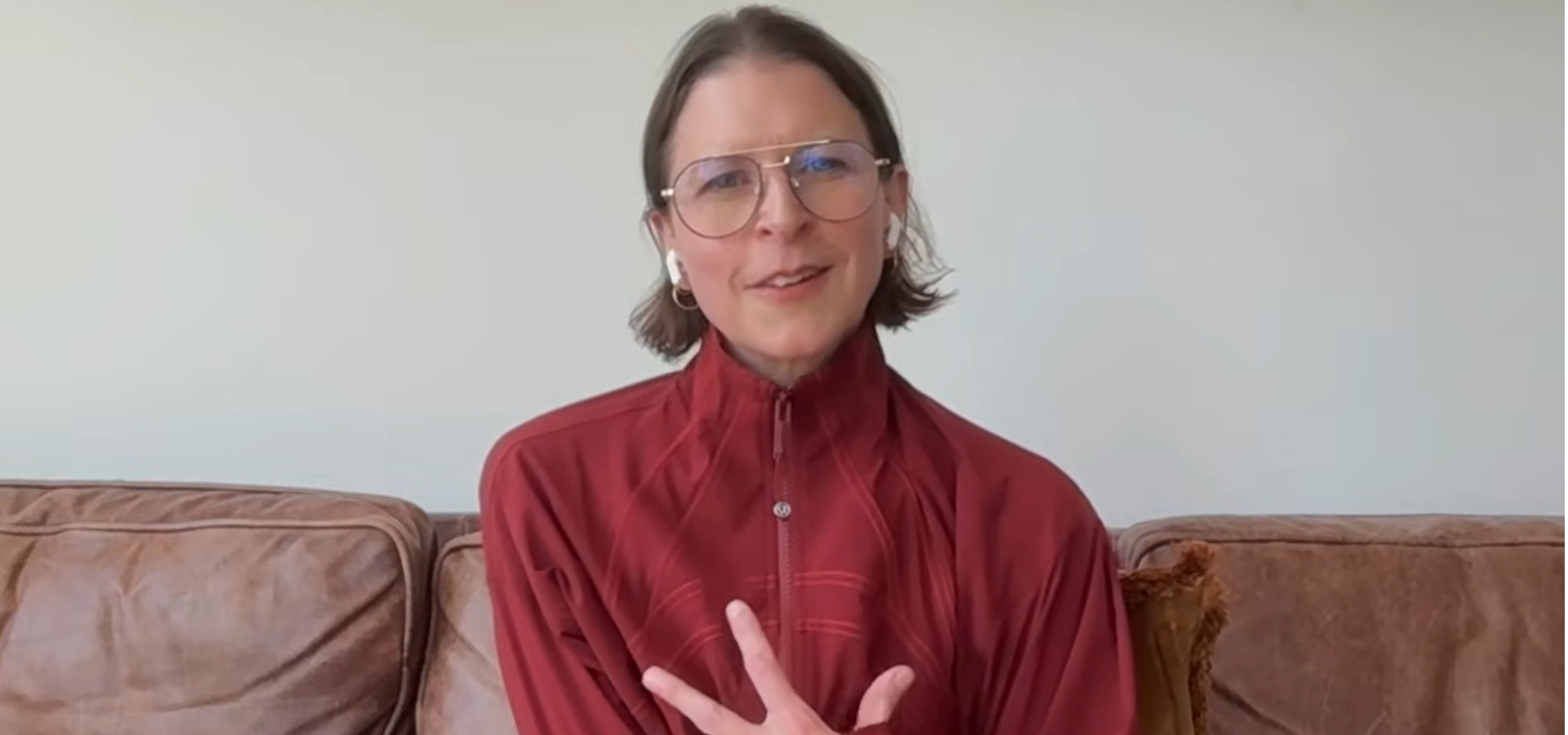
This video features Aszure Barton, choreographer and director of A a | a B : B E N D; Greg Niemeyer, Professor of Media Innovation at UC Berkeley; and Shannon Jackson, Cyrus and Michelle Hadidi Professor of the Arts & Humanities at UC Berkeley.
Find additional videos and upcoming performances and events at calperformances.org/illuminations.
Transcript
Aszure Barton:
I’m really interested in the body choreographing itself. A lot of the work comes from prompts of simple questions that I ask dancers. It’s about multitasking the body and maxing out the mind so that the body can override or take over and create its own language. I ask, okay, let’s create a phrase with the head and let’s create a phrase with the left arm, and then with the right fingers; and then layering the body to be able to discover something new. It’s like learning a new language. The humanity that lives in the body then is exposed through simple tasks of putting things together.
Embodied being & knowing
Greg Niemeyer:
Is there a meaningful difference between knowing something intellectually and knowing it through the body?
Shannon Jackson:
Yes. Our brains are attached to our bodies. The body is not a place of unknowing. It is a repository of codes, of histories, of memories, of habits.
Greg Niemeyer:
We direct our perception and our perception comes through physical processes. When we think, we use energy and that energy is material. So, even the most abstract thought that we think is really a bodily movement, if you will. Being in the body for what the body brings—grief, joy, restoration, relaxation, exhaustion—all these things are physical feelings and they lead to thoughts, so the thoughts actually come from the body.
Shannon Jackson:
The body might know something more deeply and more intimately, and actually with more complexity than the brain will sometimes give it credit for.
Greg Niemeyer:
When the word “innocence” comes up, I imagine myself as a child playing, or, if I’m lucky, even as an adult playing. There’s a lot of innocence in play. We’re most innocent when we don’t calculate at all how long it will take to get something done, when we don’t try to extract things from time.
Aszure Barton:
It’s so easy over the years to forget that space or to lose touch with that emptiness or that not-knowing space.
Shannon Jackson:
It’s from the place of experience where we’re burdened and shackled by responsibility, and obligation, or the feeling of alienation, or something—that makes us, if I may, “invent” a concept of innocence, that we find ourselves longing for something unmediated precisely because we feel so fettered by mediation. I don’t know that the quest can be about finding that purity, finding what I think people think of when they think of “innocence,” that it’s authentic, it’s truth, it’s natural, it’s pure—I’m not sure we can get there, get back there, or I’m not sure we were ever there.
Technology & innocence
Greg Niemeyer:
AI is the industrialization of losing innocence because AI is really about pursuing a particular goal in as little time as possible. It’s very efficient and it’s very good at that, but it really is quite extractive in that sense. It’s really designed to make things go faster. Whenever we make things go faster, we are definitely not innocent. We’re definitely thinking about a particular end goal that we’re really adamant about achieving, and oftentimes that’s a little bit out of sync with the world. I think the world actually would benefit from us slowing down a great deal.
Shannon Jackson:
Again, it’s not that the technology is here for us to fear its encroachment, but for us to get smart about how it works on us and to make interventions into how we want it to work on us.
Aszure Barton:
You reach a point [when] the knowledge you have and the experience that you have is enough, and that if you can trust yourself, then you’ll make things that are far beyond what you have ever imagined. If you know what you’re going to do before you do it, you’re going to do something you’ve done from the past, is what I’ve learned. So, you’ve got to take risk and jump into the deep end sometimes.
Learning & unlearning
Shannon Jackson:
I consider unlearning to utterly be a process of new learning. I think of it as an extended and expansive learning. It means opening up to new forms, healthy forms, of mediation.
Greg Niemeyer:
I think it’s very important that we always seek to learn as fast as possible. That means to revise our beliefs, to revise our stereotypes, to pay attention to the world around us, and to take in information and make change possible. But also, we could learn a lot from just going a lot slower. If the world offers us an opportunity to do something a little bit slower, we should take it.
Shannon Jackson:
We believe that the opportunity to work together, to collaborate together, to fail together, to learn from others, to compose and recompose sentences in real-time interaction with each other is how we build conditions for flourishing citizens of the world.
Aszure Barton:
There’s no hierarchy in the process when we’re working [on B E N D], so everyone really participates equally in the process, and that is the magic for me. I mean, it’s creating a space where everyone is absolutely involved.