Around the World in 80 Performances: The World-Traveler’s Guide to the 2026–27 Season
If you’re someone who loves to experience cultural performance traditions from around the world, our “World-Traveler” guide will prove a great point of departure for your adventures—no plane ticket required! Each season, Cal Performances brings the world’s best artists from all across the globe to Berkeley, and the 2026–27 season is certainly no exception. This curated list highlights a handful of performances headed to the Bay Area soon, and provides direct insights from the artists about how their culture gives life to their work.
APR 17, 2027, ZELLERBACH HALL
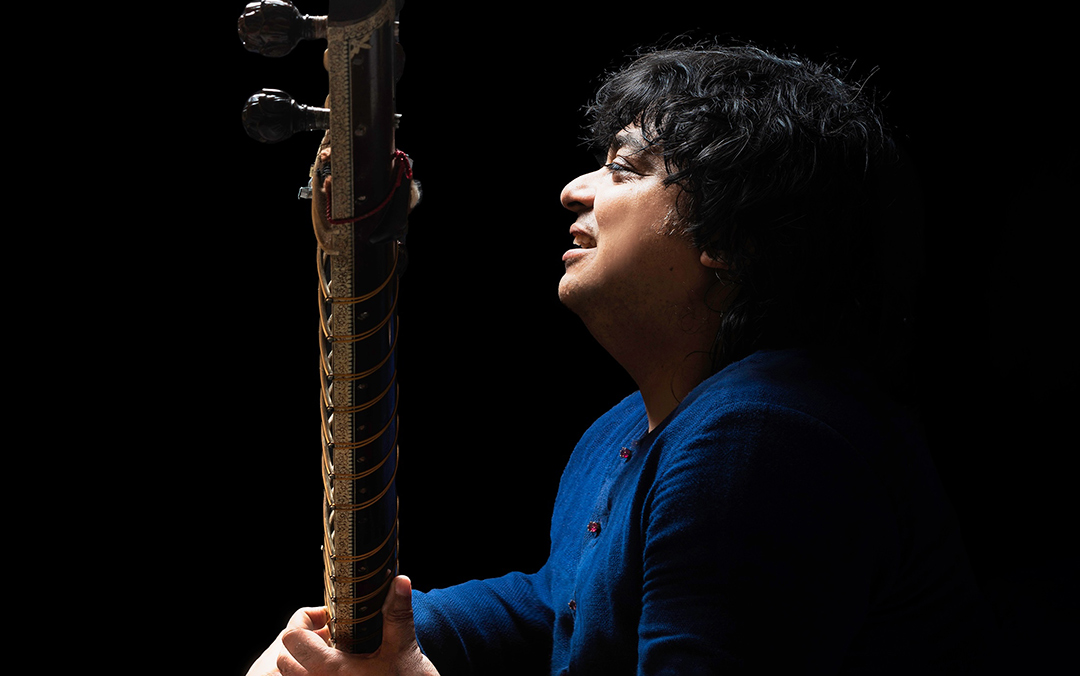
Maverick instrumentalist and composer Niladri Kumaar carries a musical lineage that is as much cultural as it is personal. As a fifth-generation sitarist, Kumaar grew up surrounded by Indian classical music from a very young age, giving his first performance at age 6 and releasing his first album in collaboration with his father at age 15. Today, Kumaar is among the most compelling and innovative artists in Indian classical music, and embraces his “journey and challenge of making the sitar and classical music more accessible, loved and appreciated in the minds, hearts and playlists of the younger generation.”
“In music, there is space between the notes; and that very music actually reduces the space between people, time, place, and connection. Regardless of different cultures and languages, music just binds it all. … In my upcoming tour, we celebrate that magic that music has to string it all together. The sitar is a royal instrument of India. She represents the Indian classical soul but also showcases the infinite possibilities one has with the instrument being fretted and fretless together. This time, I’m also looking forward to touring with my zitar, the electric sitar. The amazing musicians with me on the tabla, keys, and drums complement the traditional sound. The beauty of Indian culture is that its identity is strong yet has a universal appeal. That’s why Indian music has always intrigued listeners. It is my humble attempt to reach as many people as possible, to experience the beauty, divinity, and timeless relevance this music holds. I look forward to having Indian music on the global stage and seeing you all soon.” —Niladri Kumaar
Kumaar was an admired collaborator and longtime protegé of the late tabla virtuoso Zakir Hussain—appearing multiple times with him at Cal Performances—and their special musical relationship is explored in Sumantra Ghosal’s documentary film The Space Between the Notes. To honor his friend and mentor, Kumaar has created a new ensemble of Indian and North American musicians that will perform a program combining his own original compositions with works that he and Hussain once played together.
In this video, Fairouz Nishanova, Director of the Aga Khan Music Programme, talks about how musical fusion is not a new concept but a centuries-old tradition of cultural exchange.
APR 16, 2027, ZELLERBACH HALL
The artist collective of Aga Khan Master Musicians was formed through the Aga Khan Music Programme, a multi-faceted education, performance, production, commissioning, and awards platform that convenes leading artists from the Great East and Mediterranean worlds to explore what happens when long-travelled musical paths meet again in the present.
The members of Aga Khan Master Musicians and their special guests—collectively representing roots in Central Asia, China, the Middle East, and France—are dedicated to using their own cultures and personal experiences, including encounters with displacement and migration, to create a modern sound that resonates across continents and centuries. Here, the septet performs a fresh program of jointly created new works inspired by the ancient routes that connected trade and culture between Asia and the Mediterranean. The instrumentation of the performance is in keeping with the theme of putting cultures in dialogue, featuring: Feras Charestan on the Middle Eastern string instrument, the qanun; Abbos Kosimov on the traditional Uzbek percussive instrument, the doira; Wu Man on the Chinese pipa, a four-string plucked lute; Vincent Peirani on the Europe-originated accordion; Basel Rajoub on the European saxophone and the Middle Eastern wind instrument duclar; Vincent Ségal on the European cello; and Yurdal Tokcan on the oud, the traditional lute-like instrument of the Middle East.
FEB 13–14, 2027, ZELLERBACH HALL
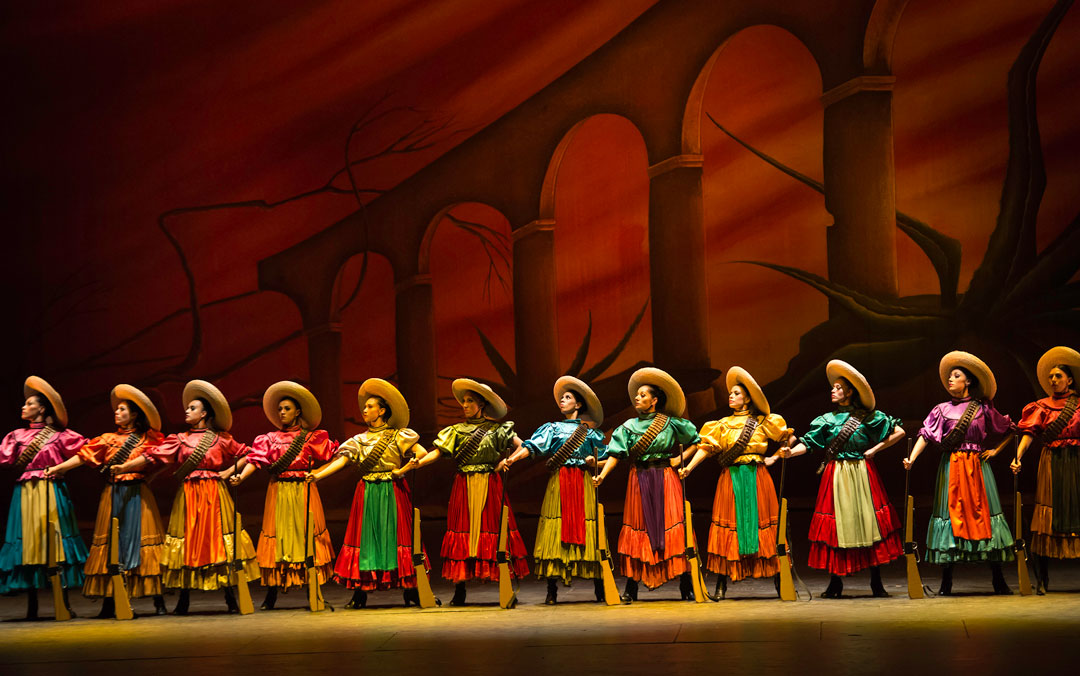
Seventy-five years ago, choreographer Amalia Hernández founded Ballet Folklórico de México with a vision: to take regional folk dances and their surrounding Mexican subcultures—from pre-Columbian civilizations to the modern era—and elevate them onto a global stage. In the decades since, her company has reached more than 45 million spectators worldwide and served as an official ambassador of Mexico, firmly establishing itself as one of the world’s premier folkloric dance ensembles. Its accolades are numerous and include the National Prize for Fine Arts from the Mexican government and France’s Legion of Honor.
“My mother [Amalia Hernández] was very creative. She had a lot of ways to understand—not to repeat what she saw, but to translate what was the language of Mexican roots. … What we really want to share is ‘what are the roots,’ ‘what are they doing,’ and making [Mexicans and Mexican Americans] love where they come from and not be ashamed. Be proud of where you come from. … I think it makes our roots and our present stronger.” —Viviana Basanta Hernández, artistic director of Ballet Folklórico de México and daughter of founder Amalia Hernández, in interview with The Hoya
This anniversary tour is a celebration of everything the group’s legacy encompasses: a well-rounded feast of dance, music, storytelling, and vibrant, intricate costuming that amplifies and honors the full richness of Mexican cultural heritage. To experience Ballet Folklórico de México is to understand, in the most visceral and joyful way possible, just how much a single performance can deliver. Each regional style brings its own rhythms and history—and the company’s dancers convey all of it with the kind of precision and passion that demonstrates the lasting impact of its iconic and visionary founder.
In this video, members of Kodo talk about their Luminance One Earth tour, including music inspired by different cultures encountered on their travels.
JAN 22-24, 2027, ZELLERBACH HALL
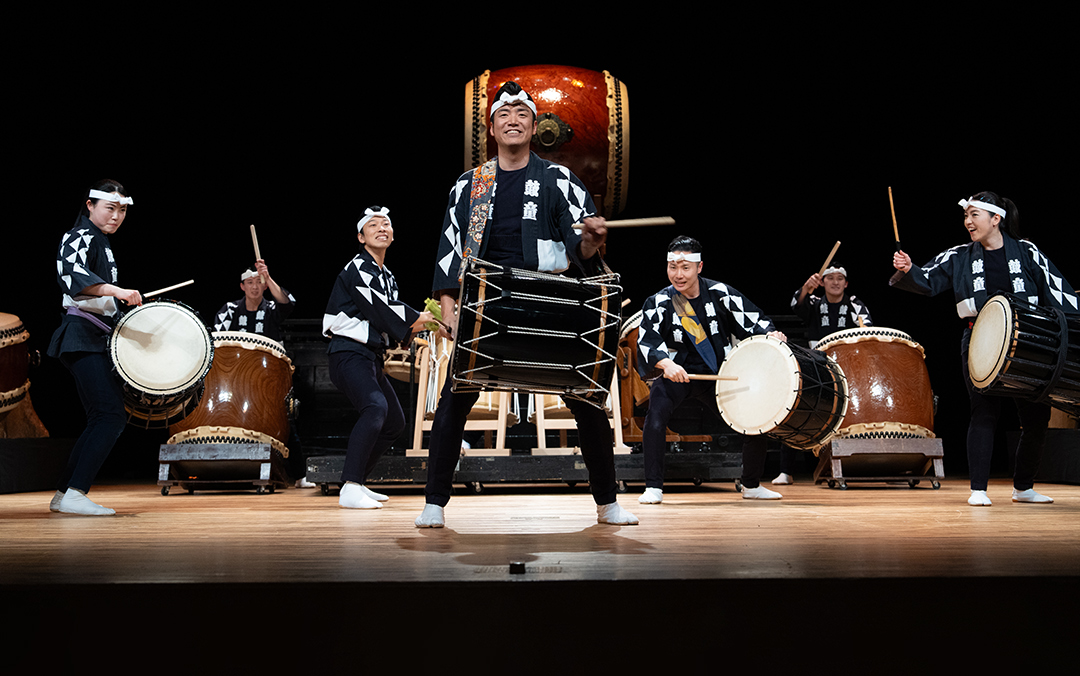
For 45 years, Kodo has evolved the ancient art of taiko drumming through rigorous physical discipline and spiritual connection while maintaining deep roots in Japanese cultural heritage. Living bearers of a centuries-old folk tradition, the ensemble’s drummers create a universe of emotion through supreme athleticism, astonishing choreography, and earth-shattering sounds drawn from enormous drums. The core of Kodo is the intention to “play the drums with the simple heart of a child,” and the effect is at once profound and exhilarating.
The new production Luminance celebrates both the troupe’s 45th anniversary and taiko’s ability to stir the soul. The performance features highlights from Kodo’s most popular tours and is in part inspired by cultures the group itself has encountered on its travels—currently standing at over 7,500 performances in more than 50 countries and regions across five continents. The program includes the mighty o-daiko drum solo and climactic “Yatai-Bayashi” finale, and a tribute to Maki Ishii’s dynamic and beloved taiko composition “Monochrome,” which involves 10 drums and two large, deeply resonant gongs.
In this video, Jean Rondeau plays an excerpt from Tombeau de Mr. de Blancrocher G. 81 by Louis Couperin. Recorded at San Stefano Church in Castelmuzio (Italy) on a Blanchet harpsichord built by Bruce Kennedy.
SUN, Nov 8, 2026, HERTZ HALL
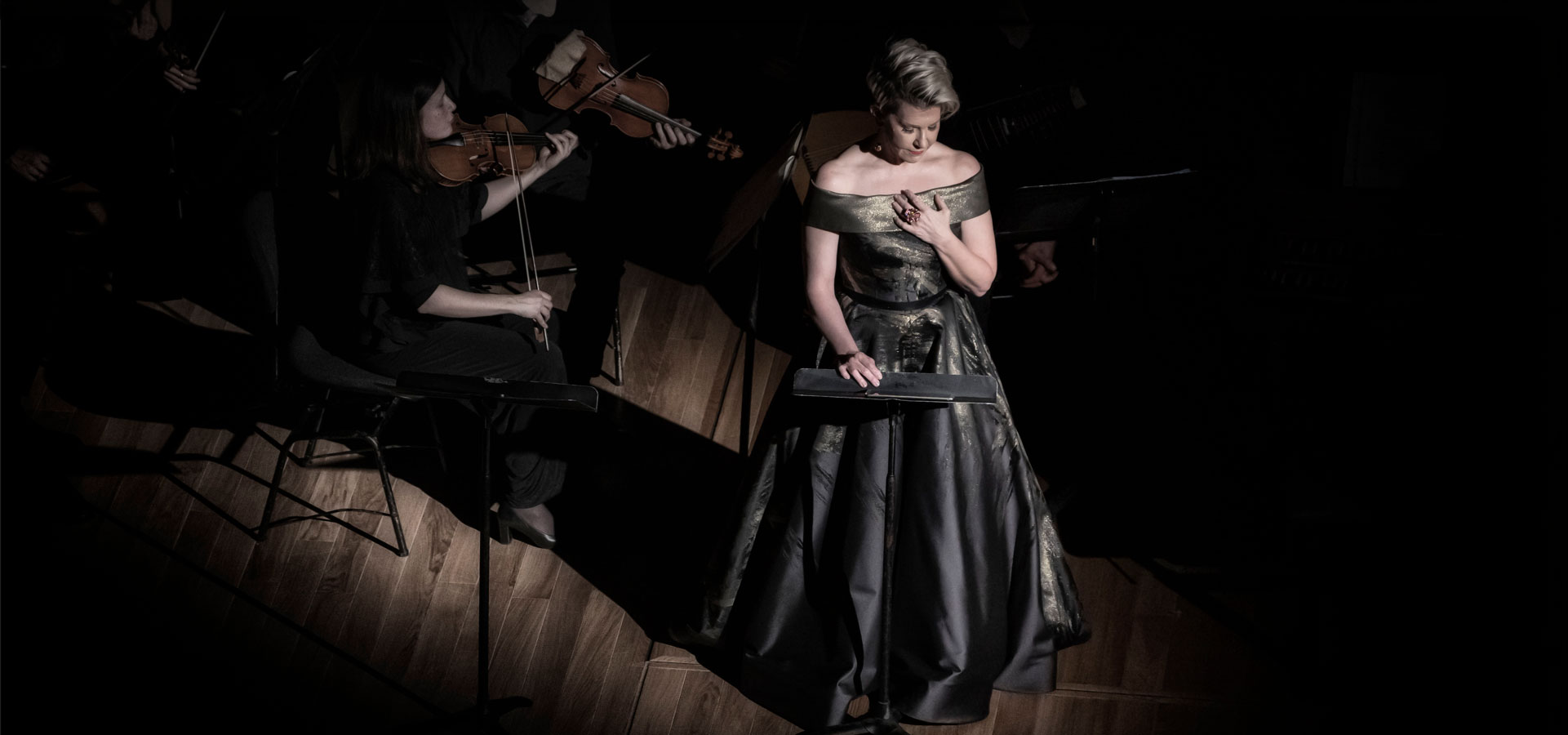
Returning to Cal Performances following his memorable 2023 recital, French harpsichordist Jean Rondeau—truly a global ambassador ushering in “new and imaginative” (San Francisco Classical Voice) ways of playing his instrument—visits with a characteristically ambitious and insightful program exploring the marvelous keyboard works originating in his home country during the Baroque period.
“It has always seemed sensible to me to immerse oneself in the historical and social context of a specific musical period in order to discern the contours of the role music played at that time and how it intertwined with social life. From this, one can derive insights into the very relationship musicians had with music, as well as with one another and within society. This program focuses both on a specific strand of 17th-century French music, marked by an emerging and experimental style, and on a particular strand of the 18th century, in which the French style is brought to its height. I wanted to bring these composers together in order to explore the continuity between musical languages and the evolution of music across different periods—what they reveal about music and how they shape it.” —Jean Rondeau
Across the recital, Rondeau will perform works by four leading lights of the Baroque style: Louis Couperin, who composed more than 100 pieces for harpsichord and was the first major member of the Couperin dynasty of musicians; Jean-Philippe Rameau, the great harpsichordist, opera composer, and musical theorist who provided a framework for the development of harmony in the 18th century and was one of the first composers to put France on the global stage; Louis Couperin’s nephew, harpsichordist and prolific composer François Couperin (who personally doubled his uncle’s output for the instrument), also known as Couperin le Grand; and Joseph-Nicolas-Pancrace Royer, whose talents with the harpsichord earned him favor with the court of Louis XV, who saw his work as an opportunity to spread French culture. To hear one of the world’s leading harpsichordists today unpack his own musical lineage in an intimate recital setting is sure to transport anyone in the audience through time and place.
NOV 28–29, 2026, ZELLERBACH HALL
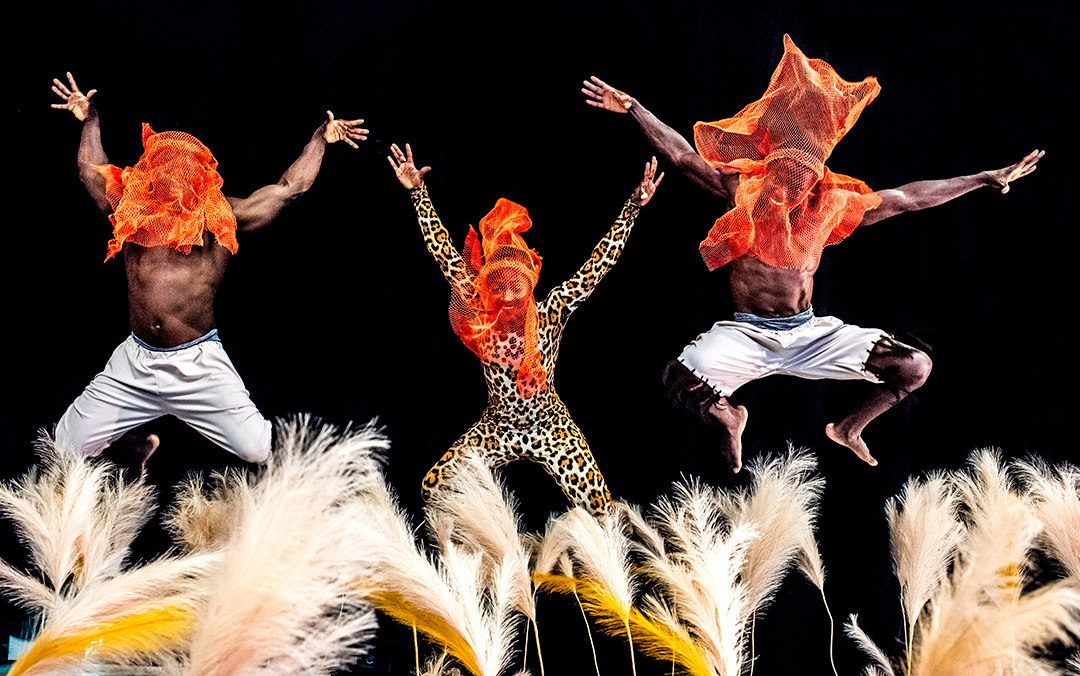
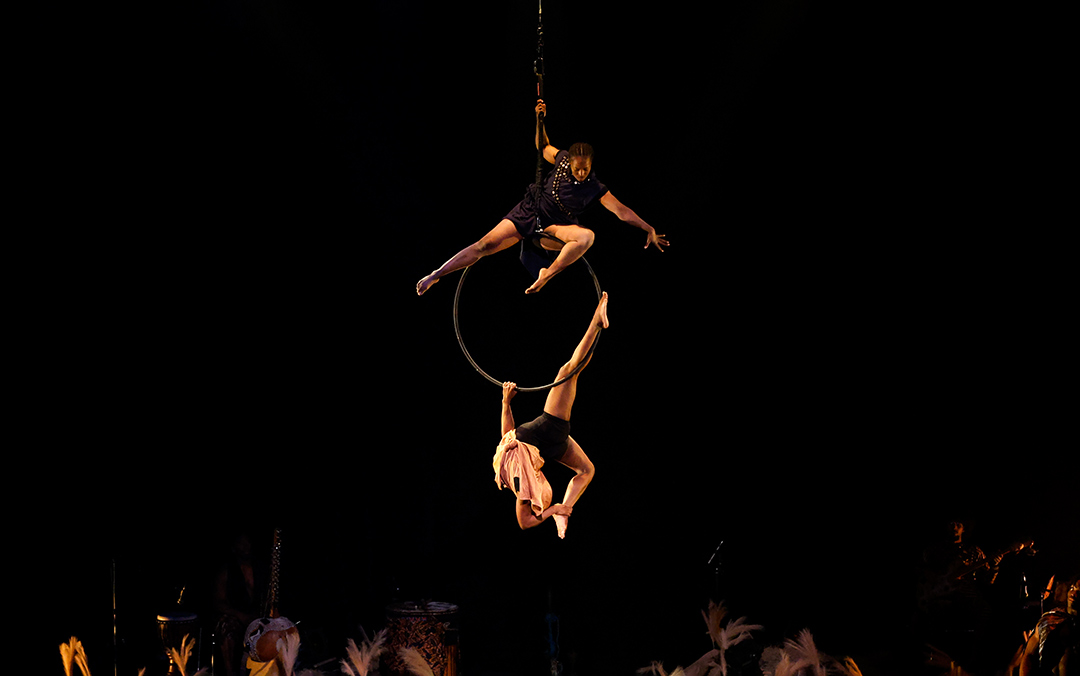
From the very first moment, WOW (World of Words) makes clear that it intends to deliver on its title. Led by Yamoussa Bangoura—a multidisciplinary artist of Guinean origin who founded both a school of circus arts and a company specializing in African arts—Cirque Kalabanté brings together traditional African movement and music with the Montreal circus tradition in a production that communicates its story almost entirely through dance, acrobatics, contortion, music, and clever staging in place of dialogue. Bangoura himself supplies a live soundtrack of singing and kora playing that matches the energy of everything unfolding around him, rooting the performance in a vivid African soundscape even as the acrobatics seem to defy every earthly limit.
“My dream was to become an acrobat and travel the world, representing Guinea. But as I traveled and worked with various circuses globally, I felt something was missing. I wanted to create something special that would remind me of my country and share the colours of Guinea with the audience. I wanted people to know where Guinea is and showcase the richness of African culture.” —Yamoussa Bangoura, founder and artistic director of Cirque Kalabanté, in interview with London Living
Bangoura, who has proudly spoken of the immense artistic talent and athleticism he was surrounded by in his home country of Guinea growing up, has trained in dance, kora, juggling, strap, acrobatics, and singing throughout his career. This wide range of talents is on full display in the company’s production, resulting in a performance that explores the transmission of knowledge and the meeting of cultures with as much warmth as it does spectacle.
OCT 23, 2026, 7:30PM, ZELLERBACH HALL
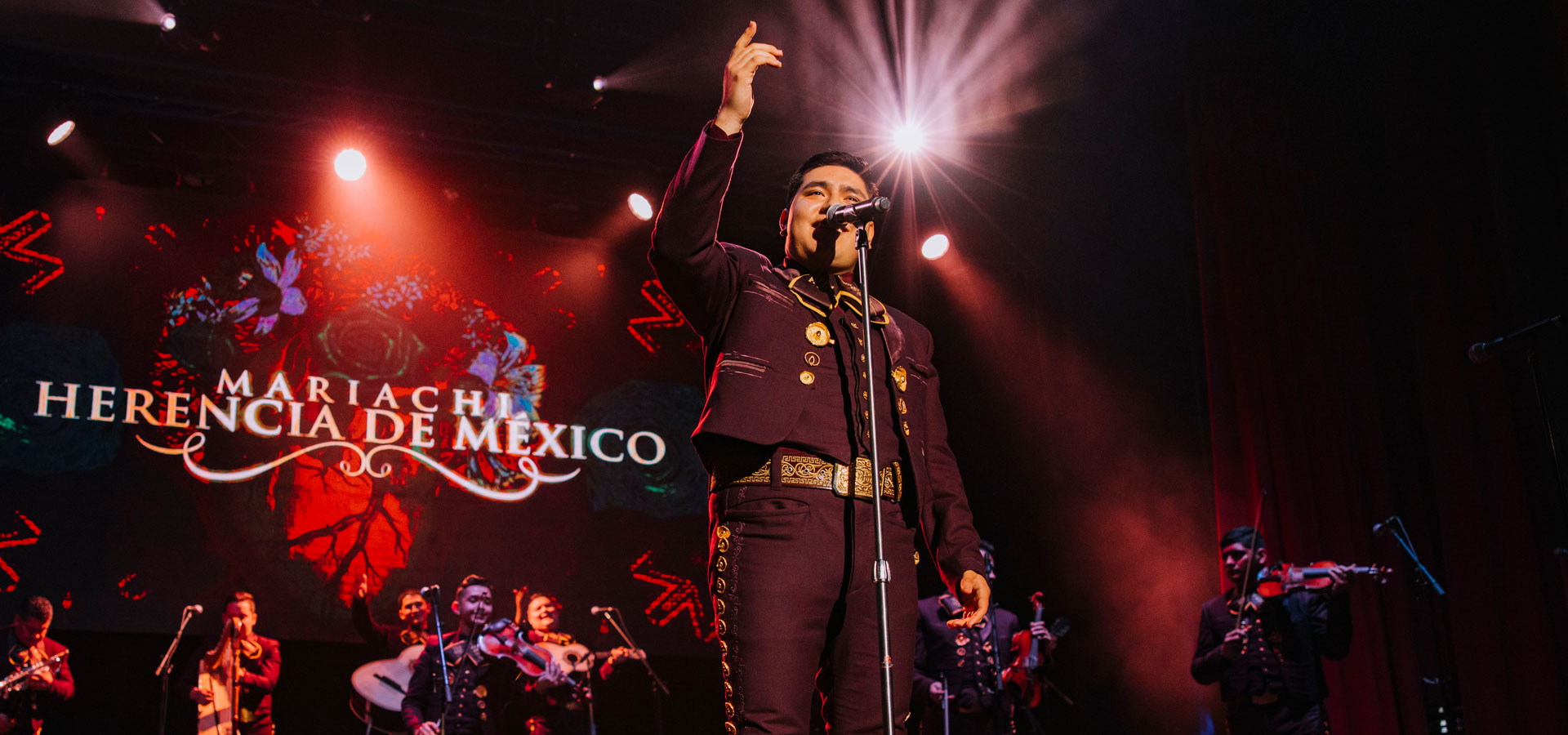
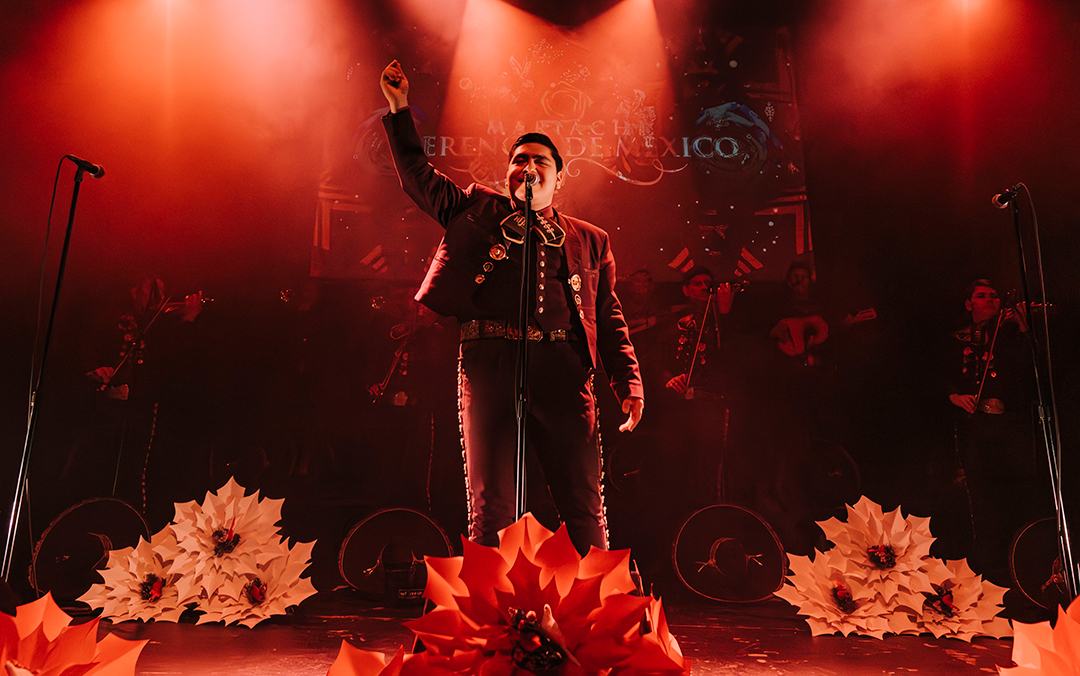
The origins of Mariachi Herencia de México are anything but traditional. The mariachi group traces its start to investment banker César Maldonado, a native Chicagoan whose parents emigrated from the same small town in México and filled his childhood home with the music of mariachi legends. Seeing a lack of cultural arts programs in the same schools he attended in his youth, Maldonado created a nonprofit, Mariachi Heritage Foundation, an enterprise dedicated to bringing mariachi curriculum to Chicago public schools. Wanting students to experience what it would be like to record music professionally, Maldonado had select program participants take part in a recording project that, released under the name Mariachi Herencia de México, would go on to earn a Latin Grammy Award nomination.
“We take it on as a responsibility to push this genre forward. … Mariachi Herencia de México is comprised of some of the best mariachi musicians in the world from all over the place…. Mariachi music is generational music, so a lot of the members are four-, five-time generations in their families of being mariachi musicians. So, as you can imagine, it’s a legacy that we respect, and when we make new music, we always try to honor the old school and put our fresh take on it, too.” —César Maldonado, founder and artistic director of Mariachi Herencia de México
Over the last decade, Maldonado has grown the band in ways no one could have anticipated. Fusing traditional mariachi repertoire (sung in both English and Spanish) with additional influences from other musical styles originating in Mexico, the Caribbean, and Central and South America, Mariachi Herencia de México pays homage to tradition while paving a new way forward.
Beyond the Stage: 2026–27 Season Guides
Explore the six guides to the season below to find the performances that were made for you.
As noted, this list includes just a small sample of performers who have proudly and proactively called out the impact their culture plays in their work; although we celebrate the fact that many of the performers on our season carry with them a cultural heritage that is inseparable from their personal artistry. Explore the full 2026–27 Season Calendar for yourself, and review our other season guides as well on Beyond the Stage.
Want to secure your seats early and save up to 25% on tickets? When you subscribe by bundling as few as four performances, you unlock the very best experience we have to offer! Explore our Subscriber benefits, and mark your calendars for when subscriptions go on sale at noon (PT) on May 5, 2026!
UC Berkeley students have access to exclusive student discounts, including a special bundle of 4 tickets called a Flex Pass. UCB Student tickets go on sale on August 21, 2026.
Related Events
Beyond the Stage: 2026–27 Season Guides
Explore the six guides to the season below to find the performances that were made for you.