

Program Books/Yaa Samar! Dance Theatre: Gathering

Yaa Samar! Dance Theatre
Gathering

Friday, February 27, 2026, 8pm
Saturday, February 28, 2026, 2pm and 8pm
Sunday, March 1, 2026, 3pm
Zellerbach Playhouse

This performance will last approximately 80 minutes
and be performed without intermission.

Cal Performances is committed to fostering a welcoming, inclusive, and safe environment for all one that honors our venues as places of respite, openness, and respect. Please see the Community Agreements section on our Policies page for more information.

On Palestinian Culture
There’s a generational aspect to gathering that I wanted to explore, especially in the Palestinian context. Here, in Palestine, joyous events like weddings or harvests, or the forced incarceration of children and elders alike, illustrate that no one is spared from the checkpoints, separation, or violence. This sense of chosen or forced unity across generations—the collective experience of a people—is something I wanted to reflect in Gathering. It’s not just about the moment; it’s about the history that led to that moment.

On Audience Participation
From the very beginning, audience participation was a core element of the work. I wanted to create a space where the audience could choose how it engaged with the performance—whether as active participants or as witnesses. Both roles are equally valid, and in fact, most of us navigate between these roles in life. The idea was that the audience’s choices could shape the outcome of the performance, just as the performers’ choices could alter the course of the piece.

On the Symbol of Oranges

When Ra’ss-Ennkoura appeared, the car stopped. The women came down from among the belongings and went to a farmer who was squatting in front of a basket of oranges. They picked up the oranges, and we heard them lamenting. At that moment I realized that oranges are something precious, and that they are dear to our hearts. The women bought the fruits and went back to the car. Your father stretched out his arm, took an orange, stared at it silently, then burst into tears, just like a miserable, little child.

We were heaped up there, withdrawn from our childhood, away from the land of oranges… oranges that died, an old farmer once told us, if watered by strange hands.”

The Sad Oranges
Ghassan Kanafani

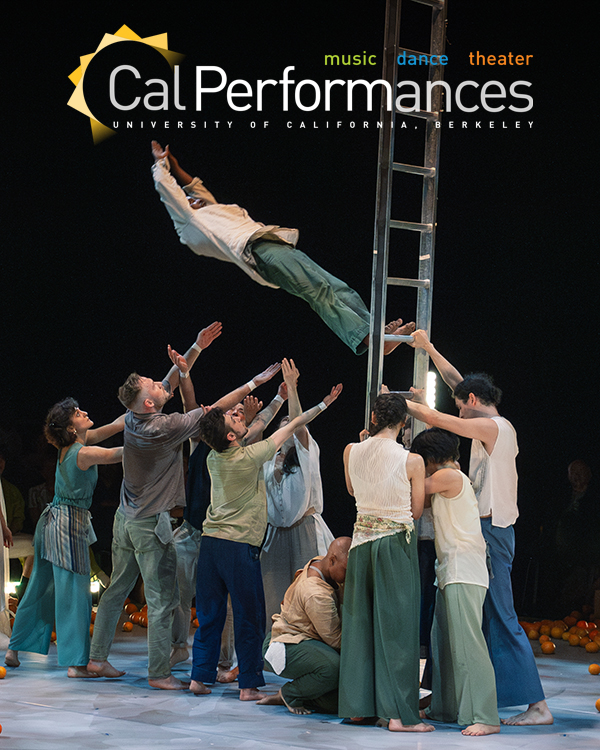
Symbols hold even more meaning when you’ve been forced to abandon them. But this wasn’t just a symbol; it was a staple, a pillar of livelihood for so many Palestinians. When this source of livelihood was taken away due to forced expulsion during the Nakba in 1948, the orange became a powerful symbol. It holds memories, the hard work, the strength of the soil, the sun’s warmth. As a fruit, it represents both the individual and the collective. It’s unique in that you don’t need a knife to separate it into parts, yet it still retains its essence. In a way, it serves as a metaphor for a dispersed people, scattered into individual parts but still part of a whole, preserving their collective essence. Sometimes sweet, sometimes sour, even bitter—it’s juicy and full of life. From the beginning, I knew the orange would be at the forefront. It’s risky to use a single object to carry so many meanings, but the orange represents livelihood, community, individuals, respect, history, land, unity, and fragmentation. It has so many layers of symbolism that it made sense to use it differently.

On the Symbol of the Ostrich
Another major symbol in the piece is the ostrich. I’ve always been fascinated by this bird. There’s so much written about ostriches throughout history—how they were revered at times, and later, in texts like the Old Testament and New Testament, almost looked down upon. The Arabian ostrich is the only species of ostrich that has gone extinct, which adds to its symbolism. It’s one of the few birds that cannot fly, despite its massive wingspan and incredible ability to run at high speeds. In Gathering, the ostrich became a kind of persona throughout the work, representing the tension between great potential and imposed limitations.

On the Use of Vivaldi’s The Four Seasons
Early on, Vivaldi’s The Four Seasons was swirling around in my mind. I couldn’t pinpoint exactly why, but I think the obvious connection was in the repetitive cycles of war. No matter how many examples there are of the devastation of war, it still continues, imposed upon so many people and communities around the world. This cycle of war feels relentless, like the seasons. But while the seasons are explained scientifically—the Earth’s axial tilt and orbit around the Sun bring about spring, summer, autumn, and winter—war’s cycles seem driven by human forces, often greed and power. For agricultural communities, like in Palestine, the seasons mark significant changes: in the fall, apples in the north and olives across the region; in winter, citrus; in spring, apricots and cherries. The markets and landscapes shift colors with the seasons. In times of war, these seasonal changes gain new significance. And with climate change and increasingly extreme weather, there’s a growing impact—severe cold, severe heat—which becomes dire for those living with minimal shelter, for many a simple sheet of thin plastic. Winter used to mean gathering in small rooms, sharing warmth, stories, and tea; the time when our lands would finally drink and our plants would grow. During war, it’s an additional obstacle between life and death.

On the Current Political Context
October 7, 2023 changed everything. The mass murder, the violence—it all hit hard. Gaza has been under siege since 2007, and the West Bank occupied since 1967. The Nakba in 1948, when over 800,000 Palestinians fled their homes—my family among them—is still fresh in the memories of our parents and grandparents. Our orange groves abandoned, never to be ours again. What’s happening now is just a continuation of that history. It’s impossible to make art in a vacuum, and this context inevitably colors the work.

In the face of mass destruction, it’s the simple things that haunt me. The dreams that are stolen in war. Israa’s story reflects that—the small, everyday dreams that get lost. As a creator, I have to know what the work is about. I have to tell a story. And that story, for me, is about resilience and joy. Despite the horrors, these characters keep going. That resilience is not just part of this piece—it’s part of the Palestinian spirit.
Samar Haddad King

Concept, Text, and Direction Samar Haddad King
Created by Yaa Samar! Dance Theatre
Choreography Samar Haddad King in collaboration with the performers
Dramaturgy Enrico Dau Yang Wey
Assistant Direction Stephanie Sutherland
Rehearsal Direction Zoe Rabinowitz
Lightning Design Muaz Aljubeh
Music Vivaldi’s The Four Seasons, “Recomposed” by Max Richter
Original songs by Samar Haddad King
Costume and Prop Design Nancy Mkaabal
Production Manager Frances Caperchi

Yaa Samar! Dance Theatre
Artistic Director Samar Haddad King
Executive Director Zoe Rabinowitz
Operations & Communications Manager Elizabeth Jebran

Gathering
(West Coast Premiere)

Cast
Israa Samaa Wakim
Ali Mehdi Dahkan
May Adan Azzam
Khalil Nadim Bahsoun
Mustafa Charles Brecard
Shahd Dounia Dolbec
Souad Yukari Osaka
Leila Zoe Rabinowitz
Nidal Arzu Salman
Sham Natalie Salsa
Jamal Yousef Sbieh
Mahmoud Mohammed Smahneh
Adan Enrico Dau Yang Wey
Mina Ash Winkfield

World Premiere:
June 20–22, 2024 at The Shed, New York, NY

European Premiere:
October 8–11, 2025 at Théâtre nationale de Bordeaux Aquitaine, FAB Festival (Bordeaux, France)

FUNDING CREDITS
European Tour 2025–26
Produced by Au Contraire Productions and Yaa Samar! Dance Theatre in co-production with Scène nationale – Carré-Colonnes; FAB Bordeaux; Scène nationale du Sud-Aquitain; Théâtre d’Angoulême – Scène nationale; Scène nationale – Brive-Tulle; La Coursive – Scène nationale; Scène nationale – Aubusson; Le Moulin du Roc – Scène nationale; TAP – Scène nationale de Grand Poitiers​​; with the support of the Ministry of Culture as part of the Mieux produire Mieux diffuser plan.

This engagement was supported in part by Mid Atlantic Arts. This project is presented with the support of Adami, Ettijahat – Independent Culture, and F.U.S.E.D., a program of Villa Albertine and Albertine Foundation. With residency support from Le Grand Jeu: artistic research, creation, and experimentation in nature.

Production of the New York Creation in June 2024
Gathering: New York City was commissioned by The Shed (2023–24 Open Call Series) and created with the support of a 2022–23 CUNY Dance Initiative Residency at Snug Harbor Cultural Center & Botanical Garden and a 2023 Residency at Dance Place in Washington DC. The premiere was made possible with support from the British Council, Center for Arab American Philanthropy, a Foundation for Contemporary Arts Emergency Grant, Howard Gilman Foundation, National Endowment for the Arts, New Music USA, NYC Department of Cultural Affairs, New York State Council on the Arts, and The Pierre and Tana Matisse Foundation.

Each year in February, as we move into our busiest time of the year, Cal Performances’ calendar becomes especially packed with a wide range of carefully curated events designed to appeal to the adventurous sensibilities and eclectic interests of Bay Area audiences. Over the coming months, we’ll see visits by an array of companies, ensembles, and soloists offering a remarkable set of opportunities to revisit old friends as well as discover marvelous and unfamiliar performers and artworks.

Our February programming alone features nearly two dozen presentations in our halls. You’ll find musical programs performed by world-class artists like baritone saxophonist Steven Banks and pianist Xak Bjerken (Feb 1, Hertz Hall [HH]), pianist Bruce Liu (Feb 10, Zellerbach Hall [ZH]), the beloved Takács Quartet (Feb 22, HH), and gifted jazz artists Cécile McLorin Salvant (Feb 5, ZH) and Somi (Feb 21, Zellerbach Playhouse [ZP]); enthralling contemporary dance programs with the great Martha Graham Dance Company, celebrating its 100th anniversary (Feb 14–15, ZH), and—in its highly anticipated Cal Performances debut—A.I.M by Kyle Abraham (Feb 21–22, ZH); cutting-edge new music from UC Berkeley’s own Eco Ensemble (Feb 7, HH), mezzo-soprano Joyce DiDonato with string trio Time for Three (Feb 7, ZH), and AMOC* and Sandbox Percussion in their mesmerizing co-production of Canto Ostinato, a hypnotic late-1970s minimalist work by Dutch composer Simeon ten Holt (Feb 22, ZP); and thrilling theater from Yaa Samar! Dance Theatre in the West Coast premiere of the company’s brilliant Gathering (Feb 27–Mar 1, ZP).

In the coming months, we’ll welcome a full spectrum of talent including Cal Performances’ 2025–26 Artist in Residence Víkingur Ólafsson; legendary soprano Renée Fleming; the virtuoso JACK Quartet; early-music superstars The English Concert, Jordi Savall, and The Tallis Scholars; and the phenomenally popular Silkroad Ensemble with Rhiannon Giddens.

And in April, our acclaimed dance series continues, distinguished by genre-defining artists and major new productions including The Joffrey Ballet in a bold new work set during Midsommar, the traditional Scandinavian summer solstice festival; and, of course, a return April engagement with the Alvin Ailey American Dance Theater.

As you explore the calendar, I recommend you pay particular attention to our Illuminations theme of “Exile & Sanctuary,” focusing on how issues of displacement can inform bold new explorations of identity and community; and how artistic expression can offer safe harbor during times of unrest or upheaval.

The opportunity to engage with diverse artistic perspectives and share the transformative power of the live performing arts is one of life’s greatest pleasures, and I look forward to encountering these profound and entertaining experiences with you in the months ahead.
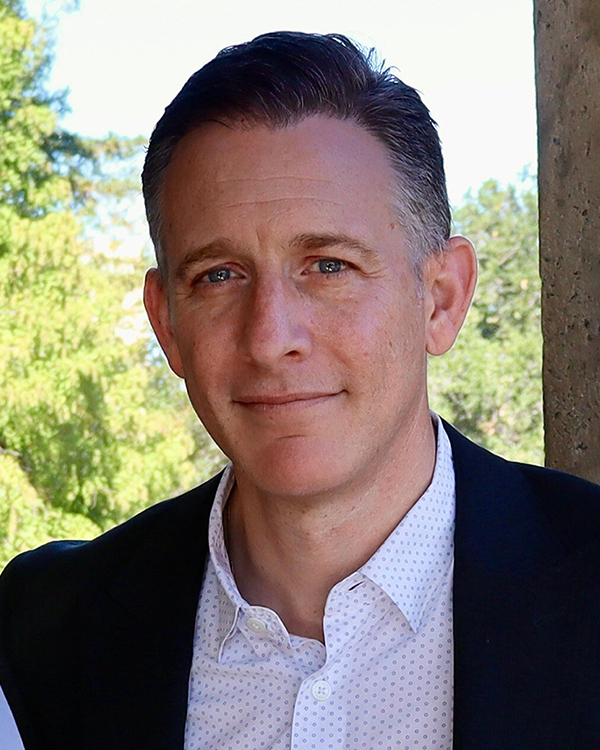
Jeremy Geffen

Jeremy Geffen
Executive and Artistic Director, Cal Performances

About Cal Performances

Need Help?